

Table of Contents
- Why Work With a Robot Integrator?
- Does the Integrator Know Your Application?
- Has Experience Become an Established Solution?
- What Can You Learn From a Reference Visit?
- Listen to the Questions Asked During the Factory Visit
- What Is Behind the Quotation?
- A Detailed Proposal Takes Preparation
- Before You Choose Your Integrator
In this article
- Why experience in your application matters when selecting an integrator.
- What established solutions and working references can tell you.
- What to look for during a factory visit and the discussions that follow.
- How to evaluate the engineering behind a robot proposal.
When discussing a first robot investment with a manufacturer, I often find that the conversation begins with a particular operation. There is a machine to load, a component to weld or a product to pack, and the team wants to understand how a robot could help.
As we look at the application together, other questions follow. How will the parts arrive? How will they be held? Which products will the system need to accommodate? What will the operator do when production changes?
These conversations are part of developing the project. They also give the manufacturer an opportunity to understand how the integrator works.
How can you tell whether an integrator has the experience your application needs?
I would like to explore that question through the things I consider important when beginning a robot project.
At Robsen, our work brings together mechanical design, robot programming, machine communication, controls and safety. Each discipline contributes to the same production sequence, so the decisions need to be developed together.
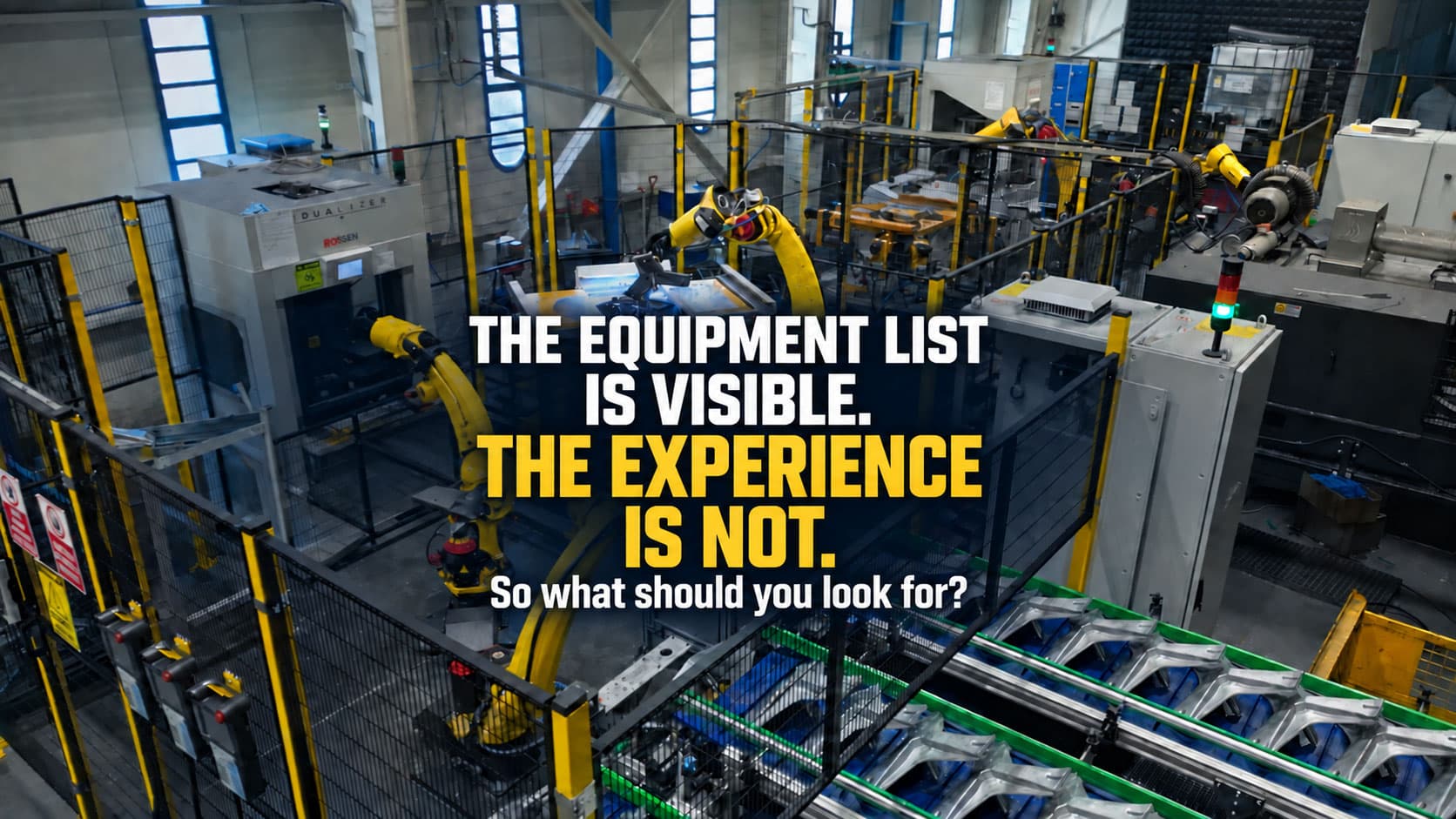
For the manufacturer evaluating a proposal, much of that work can be difficult to see at first. The equipment list and price are visible; the experience behind the proposed solution takes a little more conversation to understand.
Why Work With a Robot Integrator?
Manufacturers with their own engineering and maintenance teams sometimes ask whether they could develop the system themselves.
For a team with the relevant experience and available resources, that can be a realistic option. It helps, however, to consider the full scope before deciding who will undertake it.
Take a machine-tending application. Selecting a robot is one step. The gripper must hold the part securely and reach into the machine. The fixture must allow reliable loading and release. The machine and robot need to exchange signals, and the complete sequence must work within the required cycle time.
The layout also needs to accommodate production, operator access and maintenance.
Part of the project | What needs to be considered together |
|---|---|
Robot and gripper selection | Payload, part geometry, access to the fixture and the handling sequence |
Machine and fixture interface | Door operation, clamping, signals and recovery after an interruption |
Cell layout | Robot movement, part supply, operator access and maintenance space |
Production performance | Machining time, handling time, product changes and expected output |
An integrator brings these activities together and takes responsibility for the agreed system scope.
When choosing that partner, I would therefore look closely at their experience with the complete application. Familiarity with a robot brand is useful, but there is considerably more to discuss about how the equipment will work in your factory.
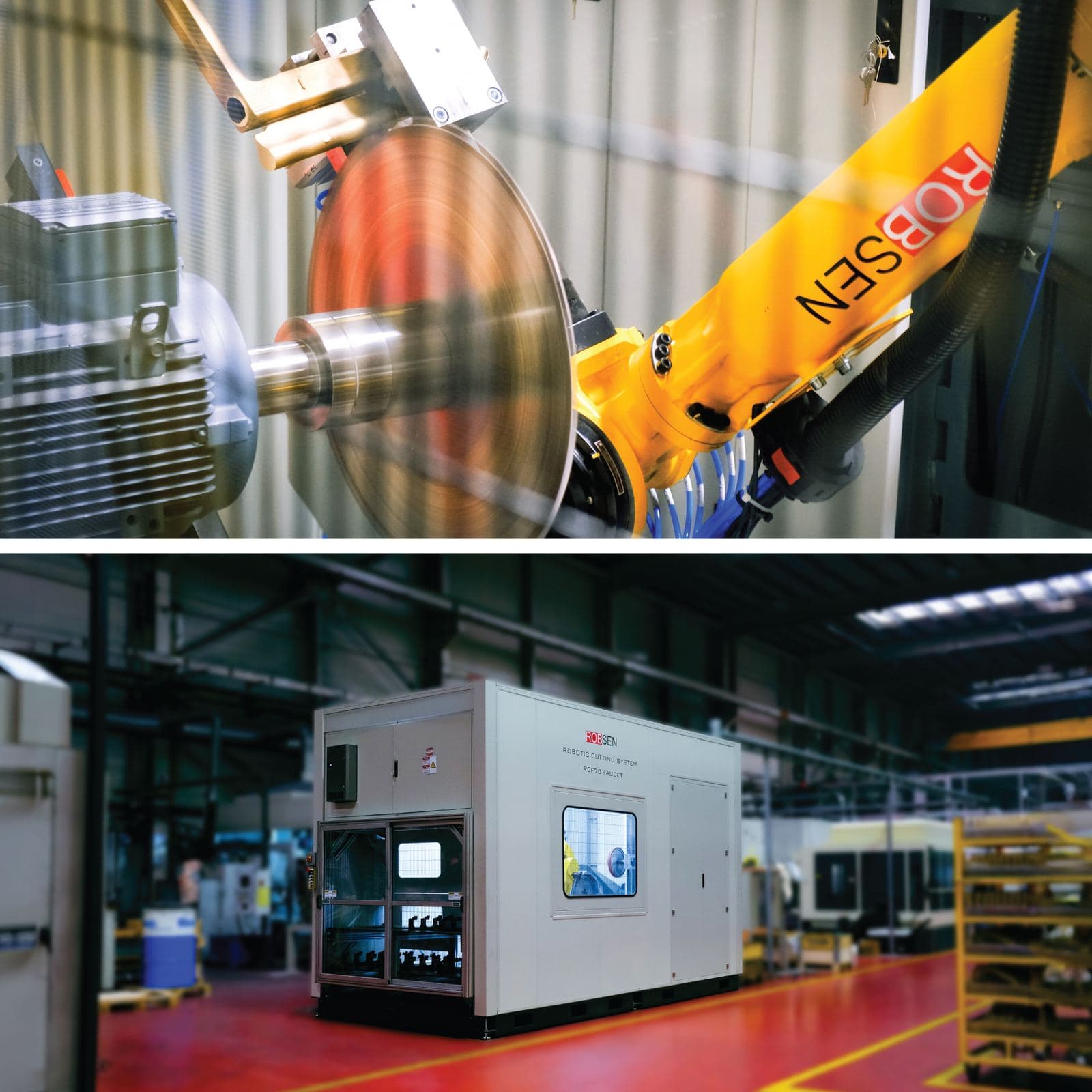
Figure 1. The ROBSEN RCF70 Faucet Robotic Cutting System — a fully enclosed cell designed to keep the operator separated from the process.
Does the Integrator Know Your Application?
Welding, machine tending, palletizing and assembly all use robots, but each application comes with its own practical challenges.
For that reason, I would begin by asking about projects close to the operation you want to automate. Similar parts, machines or production conditions can provide a useful basis for the discussion.
In machine tending, for example, the conversation may turn to how the part is located, how chips affect loading or what needs to change when another component enters production.
An integrator with experience in that application will often recognize these questions and be able to discuss how they have approached them before.
You could ask:
- Have you worked with parts or processes similar to ours?
- Which difficulties did you encounter in those applications?
- What did you change in the design after seeing the system in production?
- Which aspects of our application will require additional development?
I find the last two questions particularly useful. They give the integrator an opportunity to explain both the experience they can bring and the work that remains specific to your project.
A useful reference shows how the integrator has dealt with the production conditions your system is likely to encounter.
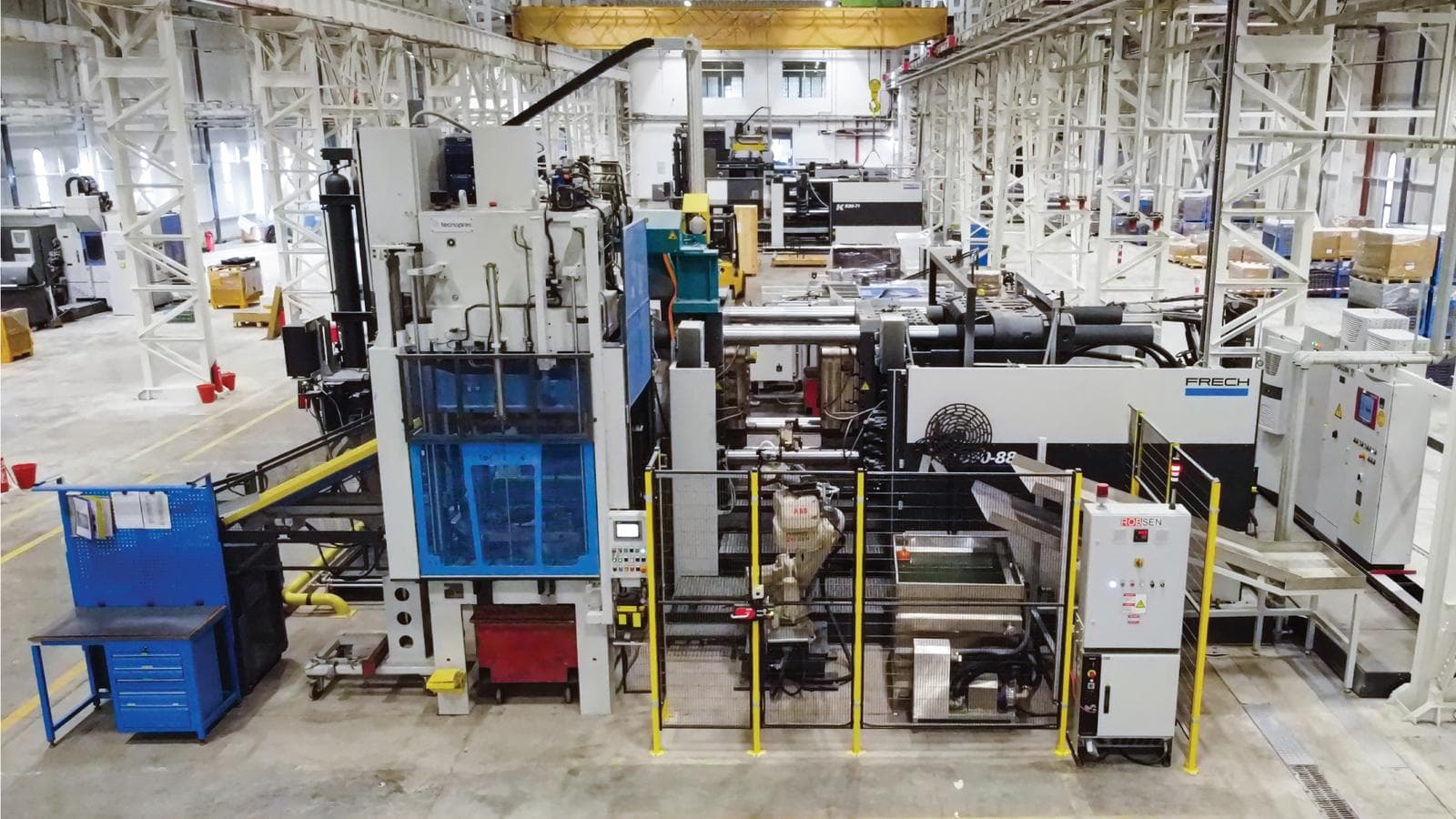
Figure 2. The first robot-integrated high-pressure die casting cell in a fourteen-machine investment.
Has Experience Become an Established Solution?
When an integrator works repeatedly in a particular application, the solutions usually develop with it.
A gripper becomes easier to maintain. A loading arrangement accommodates a wider range of parts. An operator’s feedback leads to a clearer recovery sequence. A detail that required adjustment on one installation is incorporated into the next design.
This is something I value in our work at Robsen. Customers contribute to the development of the systems through their daily experience with them.
For a manufacturer considering an investment, an established solution can offer a useful starting point. Some of the design work has already been completed and tested in production, which can reduce the amount of new development required.
It is still worth understanding where that established solution ends and the engineering for your application begins.
What can be reused, and what needs to be adapted for our parts and machines?
That question helps explain both the proposed cost and the project scope.
Flexibility deserves the same attention. A system may be described as suitable for several parts, but your team will benefit from knowing what changing between those parts involves.
Does the operator replace the gripper fingers? Is a fixture change required? Can an existing program be selected, or will another part require new programming?
The answers make it easier to picture how the system will fit into your production routine.
What Can You Learn From a Reference Visit?
A list of customers tells you where an integrator has worked. Seeing an installation in production helps you understand what that work has delivered.
Where confidentiality and production schedules allow, I encourage manufacturers to visit a comparable application.
The value of the visit goes beyond watching the robot move. You can see how parts reach the cell, how the operator interacts with it and how the equipment fits into the surrounding production flow.
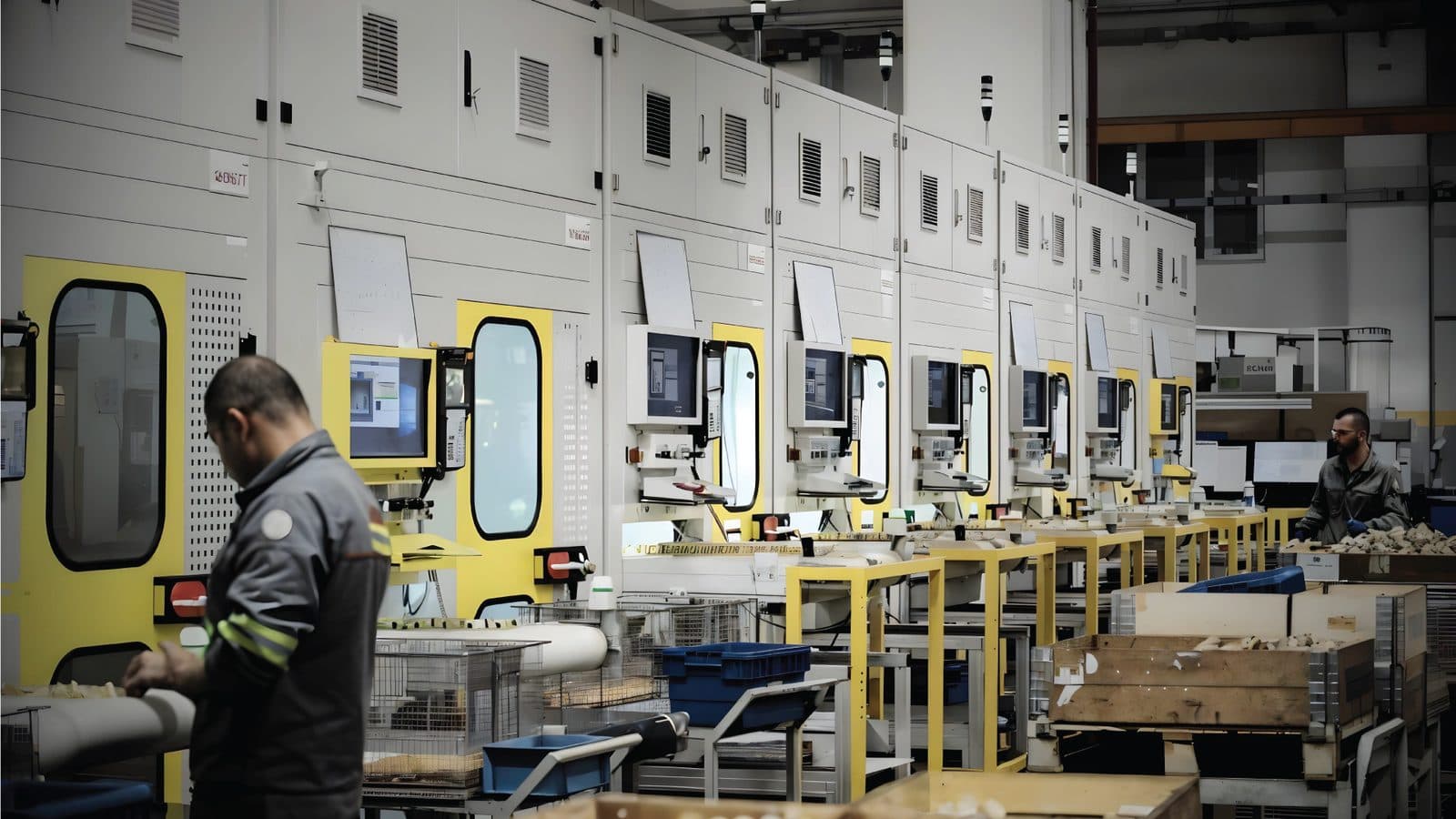
Figure 3. An IROCUBE-integrated Robodrill line, in continuous production since 2015.
A conversation with the people using the system can also be helpful:
- How long has it been operating?
- Which parts does it currently handle?
- What does a normal product change involve?
- What modifications have been made since installation?
A system that has remained in use for years offers an opportunity to understand how the original design has developed with the customer’s needs.
The reference does not have to be identical to your application. I would look for the similarities that matter: the process, the handling challenge, the production pattern or the way the customer uses the system.
Listen to the Questions Asked During the Factory Visit
The visit to your own factory is another useful part of evaluating an integrator.
Your team knows the process through daily use. An integrator brings experience from other installations. The discussion becomes valuable when those two perspectives meet.
An operator may make a small adjustment before clamping a part. Raw material may arrive in more than one orientation. A proposed robot position may interfere with access needed for cleaning or maintenance.
These details are easy to miss in an initial description of the application. Watching the operation together gives us a chance to understand them.
During a visit, I would expect the integrator to ask about the part range, production volumes, cycle times, fixtures and available space. I would also expect follow-up questions as the team learns more.
For example, if you explain that several parts use the same machine, does the discussion move on to their differences? If a part occasionally sticks in the fixture, does the team investigate how it is released?
Those questions help develop the proposal and show how the integrator approaches the application.
The factory visit is a chance to see whether the integrator is developing an understanding of your process before recommending a solution.
An initial budget estimate may be possible from drawings and a brief description. As the project moves towards a firm proposal, the supporting information should become more detailed.
What Is Behind the Quotation?
A robot proposal brings together decisions about equipment, layout, sequence and responsibilities.
When comparing proposals, I would want those decisions explained clearly enough for the production and engineering teams to discuss them.
The price is important, but it becomes more meaningful when you understand the expected production result and what has been included to achieve it.
What to examine | What it helps you understand |
|---|---|
Proposed handling sequence | Which movements take place while the machine is waiting |
Layout and simulation | How the robot reaches the required positions and moves between them |
Cycle-time calculation | Which machine and handling operations are included in the estimate |
Supported part range | What changes are needed between products |
Scope and responsibilities | What the integrator supplies and what must be prepared by the customer or another supplier |
Simulation can help explain the proposed concept, particularly where access, movement paths or cycle time need closer examination.
I would ask what the simulation includes. Does it represent the proposed gripper and workpiece? Have door operation, clamping and machine signals been considered in the cycle estimate?
For a machine-tending project, the robot’s movement time alone will not tell you how long the machine waits between parts. Understanding the complete sequence gives you a better basis for estimating output and evaluating the investment.
We explored this in The Cheaper Automation Proposal Could Cost You 3,800 Parts a Year. In that example, a twenty-second difference in the part-exchange sequence creates a substantial difference in calculated annual production.
A comparison like this also gives the integrator an opportunity to explain a price difference. Additional equipment or engineering may support a different production result, and that relationship should be visible in the proposal.
A Detailed Proposal Takes Preparation
Developing a proposal can involve process analysis, equipment selection, preliminary design and discussions with the machine supplier or other parties.
For a more involved application, that work may take several weeks.
During this period, I would look for clear communication about what is being examined, which information is still needed and when the next step will be ready.
The questions and explanations exchanged during quotation preparation help both sides. They allow the integrator to define the application more accurately and give the manufacturer a clearer understanding of what is being proposed.
Before You Choose Your Integrator
By the time you are ready to make a decision, you should have had the opportunity to understand more than the equipment and price.
You should be able to explain why the proposed concept suits your application, which relevant experience supports it and what further work will be needed.
I would bring the discussion back to three questions:
- Has the integrator demonstrated experience relevant to our process?
- Have they taken the time to understand our production conditions?
- Can they explain the engineering and expected performance behind their proposal?
Reference visits, factory discussions and a well-developed quotation can help you answer these questions.
They also give you a sense of how the relationship may develop once the project begins. In the next article, I will look at that stage: working with your integrator through project planning, testing, installation and long-term support.